
Square Top Bifocal CP Injection Mens Reader Manufacturer


- group name
- Custom Men Reading glasses
- Min Order
- 1 piece
- brand name
- READSUN Optical
- model
- RCP315002
- Nearest port for product export
- SHANGHAI, NINGBO, GUANGZHOU, SHENZHEN
- Delivery clauses under the trade mode
- FOB, CFR, CIF, EXW, FAS, CIP, FCA, CPT, DEQ, DDP, DDU, Express Delivery, DAF, DES
- Acceptable payment methods
- T/T, L/C, D/P D/A, MoneyGram, Credit Card, Westem Union, Cash
- update time
- Thu, 05 Nov 2026 07:25:07 GMT
Paramtents
Certificate CE,FDA
Size Can Be Chosed
Logo Support
Packaging Custom design can be provided
Packging & Delivery
-
Min Order1 piece
Briefing
Detailed
A men's reader built around a square-top bifocal, moulded in CP injection and supplied to OEM order.
Overview
The RCP315002 is listed as a cellulose propionate reader in the Men Reading glasses range, and it is supplied to optical importers, chain buyers and private-label programmes rather than to single retail customers. A flat-top segment gives a wide reading window with a visible dividing line, which many wearers over fifty still prefer to a progressive.
Cellulose propionate is injected into hardened steel moulds under controlled temperature, which gives a frame with more dimensional stability than polystyrene and better impact behaviour than standard acrylic. The material takes pigment evenly, so a colour approved on a master sample can be repeated across later production batches without a visible shift.
Produced as a square top bifocal reader, this top bifocal cp injection front is a cp injection mens reader made for mens reader manufacturer enquiries and shares its bifocal cp injection tooling with the rest of the men's line. Every order is built against an approved sample, so the colour, the temple length and the lens specification are fixed before production starts rather than negotiated after the first carton is packed.
Minimum order quantity, colour minimums and the certification required for your market are confirmed with the quotation, because they depend on the colour count, the destination and whether the order runs on existing tooling.
Key Features
Material and Frame Build
The front is moulded in a single shot with the bridge and endpieces included, then the temples are fitted on a metal hinge. Fewer parts means fewer failure points, which is why this construction suits a volume reader programme. Gates are trimmed flush, the parting line is sanded out and the whole front is polished, so the eye cannot find where the mould closed.
Fit for Men
Temple length and end-piece angle are set for a larger head, and the hinge is reinforced at the screw so the frame does not loosen after repeated one-handed removal, which is how most men's frames fail in service.
Lens and Optical Performance
The frame is supplied either as a frame only or with presbyopic lenses in the reading addition you specify, and the lens blank is selected to match the front's base curve so the optical centre lands where the wearer actually looks. Frames are checked on a lens-meter after mounting, and any pair that sits outside the agreed tolerance is re-edged rather than shipped.
Colour, Logo and Tooling
Colour is quoted against a Pantone reference and matched on a master sample before the run. Logo placement is confirmed at quotation stage. Existing tooling keeps a repeat order identical to the first shipment without a new mould charge, and artwork is proofed on the temple surface before the run.
Product Showcase
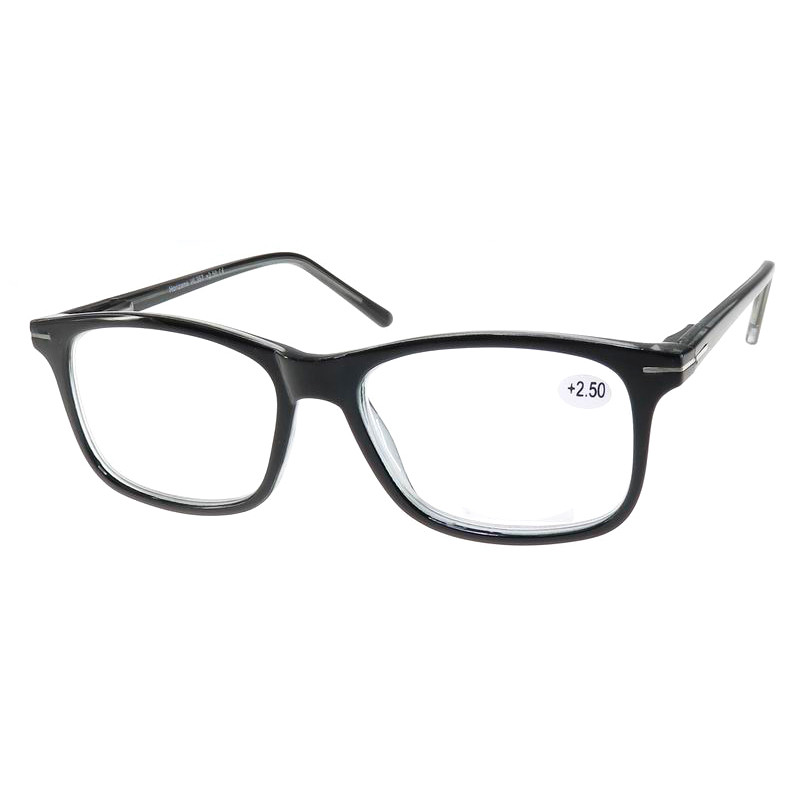
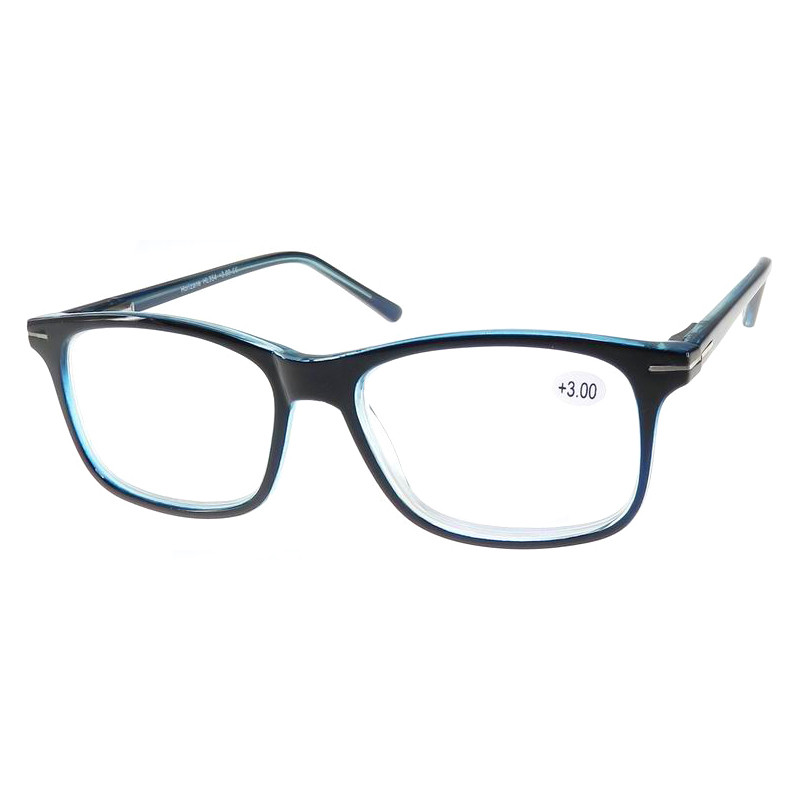
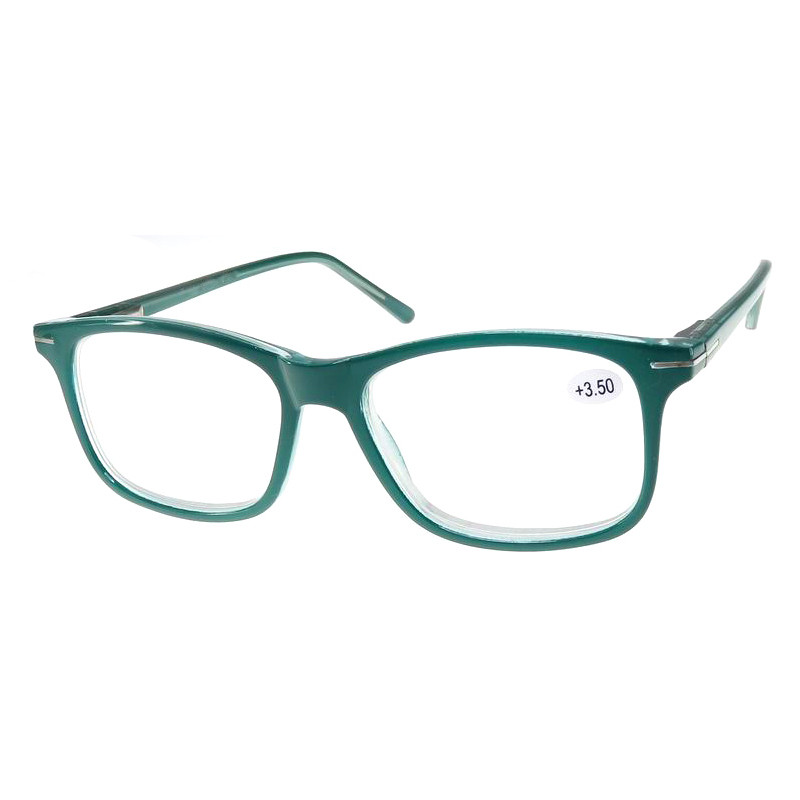
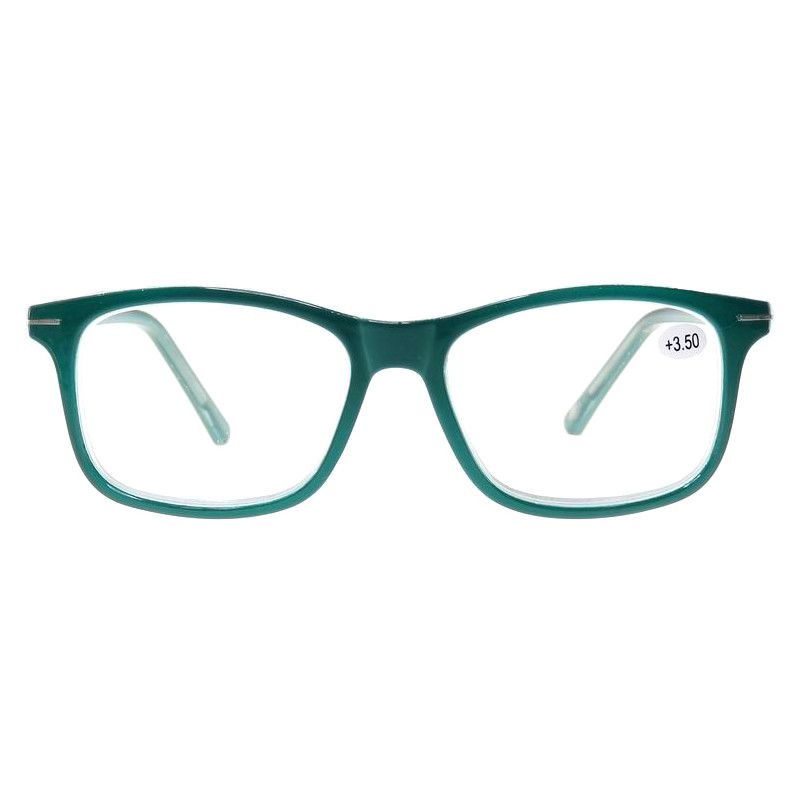
The images below are the current reference set for RCP315002: the front geometry, the temple construction and the colours quoted for this line. Use them for buyer approval, catalogue layout and the listing images your own channel needs, and ask for the raw files if you require a white background or a specific crop.



Specifications
| Model No. | RCP315002 |
|---|---|
| Category | Reading Glasses |
| Frame Material | CP injection |
| Lens | presbyopic lens, power to your specification |
| Size | Customizable on request |
| Colour | Customizable on request |
| Customization | Colour, logo and packaging to buyer specification |
| MOQ | Confirmed at quotation stage |
| Certification | Confirmed at quotation stage |
Values above are taken from the current specification sheet for RCP315002. Where a field is marked as customizable, the final figure is agreed on the quotation and written into the order confirmation, so nothing is assumed on either side.
OEM & ODM Customization
Custom work on this model is handled in two ways. OEM orders keep the existing front and change what sits on it: colour, logo, lens treatment and packaging. ODM orders start from the same platform but allow a new front shape, a different temple profile or a size run built around a specific market, which needs a new mould and a longer development window.
Both routes begin with a technical brief rather than a picture. We ask for the target market, the lens specification, the size range, the branding position and the packaging format, because those five answers decide which parts of the frame can stay standard and which have to be re-cut.
- Colour matching to a Pantone reference, with a sprayed or moulded master sample approved before production.
- Logo application by hot stamp, temperature transfer, laser or metal plate, chosen to suit the surface and the expected wear.
- Lens options including clear, tinted, UV400 and blue-light filtering, with the base curve matched to the front.
- Packaging from a plain poly bag to a printed case, a card-backed blister or a counter display box.
- Size grading within one tooling family, so a range can cover more than one fit without a second mould.
- Artwork files, colour proofs and a pre-production sample supplied for buyer sign-off before the line runs.
If you already have a specification sheet, send it with the enquiry and we will mark which items are standard, which are a tooling change and which fall outside the platform. That answer is more useful than a price list, because it tells you where the real cost sits. For buyers who want the wider programme, the OEM and ODM frame service page sets out the full development sequence.
Manufacturing & Quality Control
Quality is handled at four fixed points rather than at the end of the line, so a fault is caught while it is still cheap to correct.
1. Incoming Material Inspection
Acetate sheet, moulding compound, metal components and lenses are checked on arrival against the approved reference: colour, thickness, hinge type and lens base curve. A batch that does not match is held before it reaches the assembly bench.
2. Moulding and Frame Assembly
Fronts and temples are produced to the drawing, then joined with the specified hinge. Each assembly is checked for symmetry, temple angle and hinge tension, because a frame that is out of line cannot be corrected by adjusting the lens later.
3. Surface Finishing and Optical Check
Tumbling, polishing and any coating are inspected under a light box for scratches, sink marks and colour drift between front and temples. Glazed orders are read on a lens-meter, and the optical centre is verified against the ordered specification.
4. Packing and Final Inspection
Finished pairs are cleaned, bagged and packed to the agreed carton configuration, then sampled to an AQL plan before the carton is sealed. Carton marks, barcodes and assortment ratios are checked against the order sheet a second time at dispatch.
The full sequence, including the inspection records kept for each lot, is described on the quality control page.
Applications
This model is bought by trade customers who need a repeatable reader rather than a single pair, and it fits the following programmes.
- Retail channels including counter displays, pharmacy chains, bookshops, gift and travel retail, and online stores that need a repeatable low-price reader; here the specification has to stay identical across repeat orders.
- Private-label collections where the buyer supplies a logo and a colour reference but not a drawing.
- Promotional and seasonal programmes that need a low unit cost with certification already in place.
- Distributors building a size or colour run from one tooling family instead of several suppliers.
- Online sellers who need consistent product photography and a specification they can publish.
- Trial orders before a full season commitment, using the sample process to validate the fit.
The rest of the range sits under Men Reading glasses, and if you are comparing shapes or materials before choosing, the custom optical frame overview is the quickest place to start.
FAQ
What is the minimum order quantity?
The minimum order quantity is confirmed at quotation stage because it depends on the colour count and on whether the order runs on existing tooling. Sample pairs can be supplied for approval first. The certification position is confirmed with the quotation.
How long does a sample take?
Stock colours can usually be sampled from existing frames, while a custom colour or a logo change needs a new sample to be built. The exact lead time depends on the material and on whether a mould change is involved, so it is confirmed at quotation stage rather than promised here. Courier time is additional and depends on the destination.
Can I add my logo and my own packaging?
Yes. Logo can be placed on the temple or the lens corner, and packaging can be a printed case, a card-backed blister or a counter box. Send the artwork in a vector format with the Pantone references, and a proof is issued before the sample is made, because a logo that is approved on screen can still fail on a curved temple.
Start Your Custom Order
Send the model number, the colour reference, the lens specification and the quantity you have in mind, and you will get a quotation with the tooling position marked clearly. If the brief is still open, say so: we can quote two or three configurations against the same front so the cost difference is visible before you commit.
Prefer to talk it through first? The contact page lists the sales desk, and the Men Reading glasses category shows the other shapes built on this platform.