

How to Choose the Right Sunglasses: A Complete Buying Guide
Sunglasses are more than a fashion accessory—they are a critical layer of protection for your eyes. Long-term exposure to ultraviolet (UV) radiation is linked to cataracts, macular degeneration, pterygium (surfer's eye), and even eyelid cancers[reference:0]. Yet many people still choose sunglasses based on appearance alone, without checking whether the lenses actually block UV rays.
At READSUN Optical, we manufacture sunglasses for B2B partners worldwide. This guide covers the five decisions that matter most: UV protection, lens category, lens material, frame material, and fit.

Step 1: Check the UV Protection Rating First
This is non-negotiable. Look for a label that explicitly states “UV400” or “100% UV protection” against UVA and UVB rays[reference:1]. A UV400 rating means the lenses block wavelengths up to 400 nanometers—the full range of harmful UV radiation[reference:2].
A critical myth to dispel: darker lenses do not mean better UV protection[reference:3]. A clear lens with proper UV coating can block just as much UV as a dark one. Conversely, a very dark lens with no UV coating can be worse than wearing no sunglasses at all, because the reduced visible light causes your pupils to dilate, allowing more UV to enter the eye.
If you are unsure about a pair's UV performance, an eye-care professional can verify it with a photometer[reference:4].
Step 2: Understand Lens Categories (0–4)
Sunglasses are classified by how much visible light they transmit. This is separate from UV protection—a lens can be dark but lack UV coating, or light but have full UV400 protection[reference:5].
| Category | Light Transmission | Best For |
|---|---|---|
| Category 0 | 80%–100% | Fashion/indoor use; minimal glare reduction |
| Category 1 | 43%–80% | Low sunlight conditions; fashion spectacles |
| Category 2 | 18%–43% | Everyday use; medium glare reduction |
| Category 3 | 8%–18% | Bright sunlight; driving and outdoor activities |
| Category 4 | 3%–8% | Extreme sun (mountains, glaciers); not for driving |
For everyday wear, Categories 2 and 3 are the most common and practical choices[reference:6]. Category 4 lenses are too dark for driving because they reduce visible light to a level that can obscure road hazards.
Step 3: Choose the Right Lens Material
The lens material affects weight, optical clarity, impact resistance, and scratch resistance. Here is how the four most common materials compare:
| Material | Weight | Impact Resistance | Optical Clarity | Best For |
|---|---|---|---|---|
| Polycarbonate | Light | Excellent | Good | Sports, kids, safety eyewear |
| CR-39 | Light | Moderate | Excellent | Everyday wear, budget-friendly |
| Glass | Heavy | Low | Best | Premium optical quality |
| Polyamide | Light | High | Excellent | Premium sports and performance |
Polycarbonate is the standard for safety, sports, and children's eyewear because of its exceptional impact resistance. It has built-in UV protection, so no additional coating is needed for UV blocking[reference:7].
CR-39 is the most widely used plastic lens material. It offers excellent optical clarity and is easy to tint in almost any color, making it ideal for fashion-forward sunglass collections[reference:8].
Glass provides the best optical clarity and scratch resistance, but it is heavier, more expensive, and prone to cracking[reference:9].
Polyamide is a premium material that combines glass-like clarity with shatterproof durability. It is the top choice for high-performance sports sunglasses[reference:10].
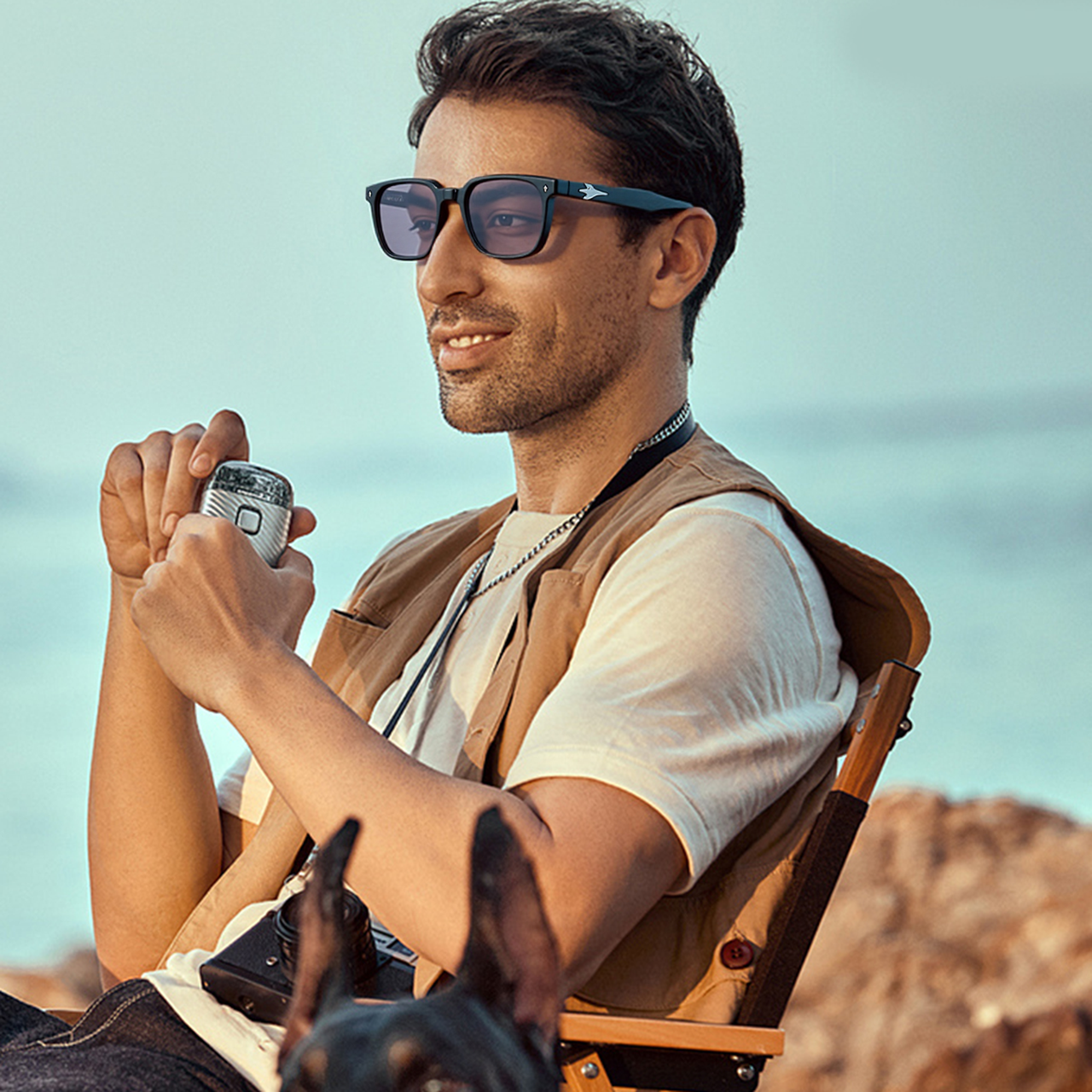
Step 4: Decide Between Polarized and Non-Polarized Lenses
Polarized lenses contain a special filter that blocks horizontally reflected light—the kind that bounces off water, roads, and snow. This significantly reduces glare and improves visual comfort and clarity[reference:11].
However, polarized lenses alone do not protect against UV light—that requires a separate UV400 coating or built-in UV protection[reference:12]. When buying polarized sunglasses, always confirm that the UV rating is also present.
Who should choose polarized? Drivers, boaters, anglers, skiers, and anyone who spends significant time near reflective surfaces. Polarized lenses are less convenient for pilots or anyone who needs to read LCD screens, as polarization can interact with certain displays.
Who should choose non-polarized? Casual users who prioritize fashion and price over glare reduction. Non-polarized lenses are also the better choice for activities where screen visibility is important.
Step 5: Select a Frame Material That Matches Your Lifestyle
| Material | Weight | Durability | Best For |
|---|---|---|---|
| Acetate | Moderate | Good | Fashion, color variety, premium feel |
| TR-90 | Ultra-light | Excellent | Sports, active use, kids |
| Titanium | Very light | Excellent | Premium, sensitive skin, corrosion resistance |
| Stainless Steel | Light | Good | Slim designs, budget-friendly metal frames |
Acetate is a plant-based plastic that offers exceptional color and pattern variety. It is the dominant material in fashion eyewear because the color is embedded into the material itself, not painted on. It is hypoallergenic and well-suited for sensitive skin[reference:13].
TR-90 is a flexible nylon-based polymer that is ultra-light and highly impact-resistant. It is the preferred material for sports frames and children's sunglasses because it bends without breaking and weighs almost nothing[reference:14].
Titanium is the premium metal option. It is exceptionally lightweight, corrosion-resistant, and hypoallergenic (nickel-free). It is ideal for all-day wear and humid climates[reference:15].
Step 6: Match the Frame Shape to Your Face
Frame shape is the final decision—and the one that determines how the sunglasses look and feel. The general principle is simple: choose a frame that contrasts with your face shape to create visual balance[reference:16].
| Face Shape | Recommended Frame | Why It Works |
|---|---|---|
| Round | Square, rectangular, cat-eye | Angular frames balance soft, curved features |
| Oval | Most shapes work well | Balanced proportions suit a wide range of styles |
| Square | Round, oval, cat-eye | Curved edges soften angular jawlines |
| Heart | Rectangle, square | Wider bottom frames balance a narrower chin |
| Diamond | Cat-eye, oval | Frames that taper at the edges complement wide cheekbones |
Beyond shape, consider coverage. Larger frames and wrap-around styles provide better protection by reducing UV light that can enter from the sides and above[reference:17]. This is particularly important for people who spend extended time outdoors.
Quick Reference: Sunglasses Buying Checklist
- UV protection: UV400 or 100% UVA/UVB protection—always
- Lens category: Category 2–3 for everyday wear; Category 4 for extreme sun (not for driving)
- Lens material: Polycarbonate for sports/kids; CR-39 for fashion/tint variety; Glass for optical quality; Polyamide for premium performance
- Polarized?: Yes for driving, water, snow; No for screen-heavy environments
- Frame material: Acetate for style; TR-90 for active use; Titanium for premium comfort
- Fit: Frame shape contrasts with face shape; larger coverage reduces peripheral UV exposure
How READSUN Optical Can Help
At READSUN Optical, we manufacture sunglasses in all major lens and frame materials for B2B partners worldwide. Our capabilities include:
- UV400 and polarized lens options across all lens materials
- Custom frame colors and patterns in acetate, TR-90, and metal
- Private label development from design to packaging
- Compliance support for CE, FDA, and other regulatory requirements
Whether your customers prioritize fashion, performance, or value, we have the manufacturing flexibility to deliver. Contact us to discuss your next sunglass collection.
Conclusion
Choosing the right sunglasses comes down to six decisions: UV protection rating, lens category, lens material, polarization, frame material, and face shape fit. Get those right, and you'll have a pair that protects your eyes while looking good doing it.
For B2B buyers, the same framework applies—but with an added focus on supplier reliability, customization depth, and compliance documentation. READSUN Optical brings over 20 years of manufacturing experience to every project. Contact us to discuss your requirements.